Craft
Hand-Stitched vs Machine-Stitched Leather: Why the Saddle Stitch Lasts
Two leather bags can look almost identical on a shelf. Turn them over, look closely at the seams, and you'll often find the reason one lasts decades while the other comes apart: how it was stitched.
How a sewing machine stitches leather
An industrial sewing machine uses a lockstitch. Two threads, one from above and one from below, loop around each other inside the material. It is fast and neat, which is why almost all mass-produced bags use it. The weakness is that the stitches depend on each other. If one stitch wears through, the thread can start to pull loose along the seam.
How the saddle stitch works
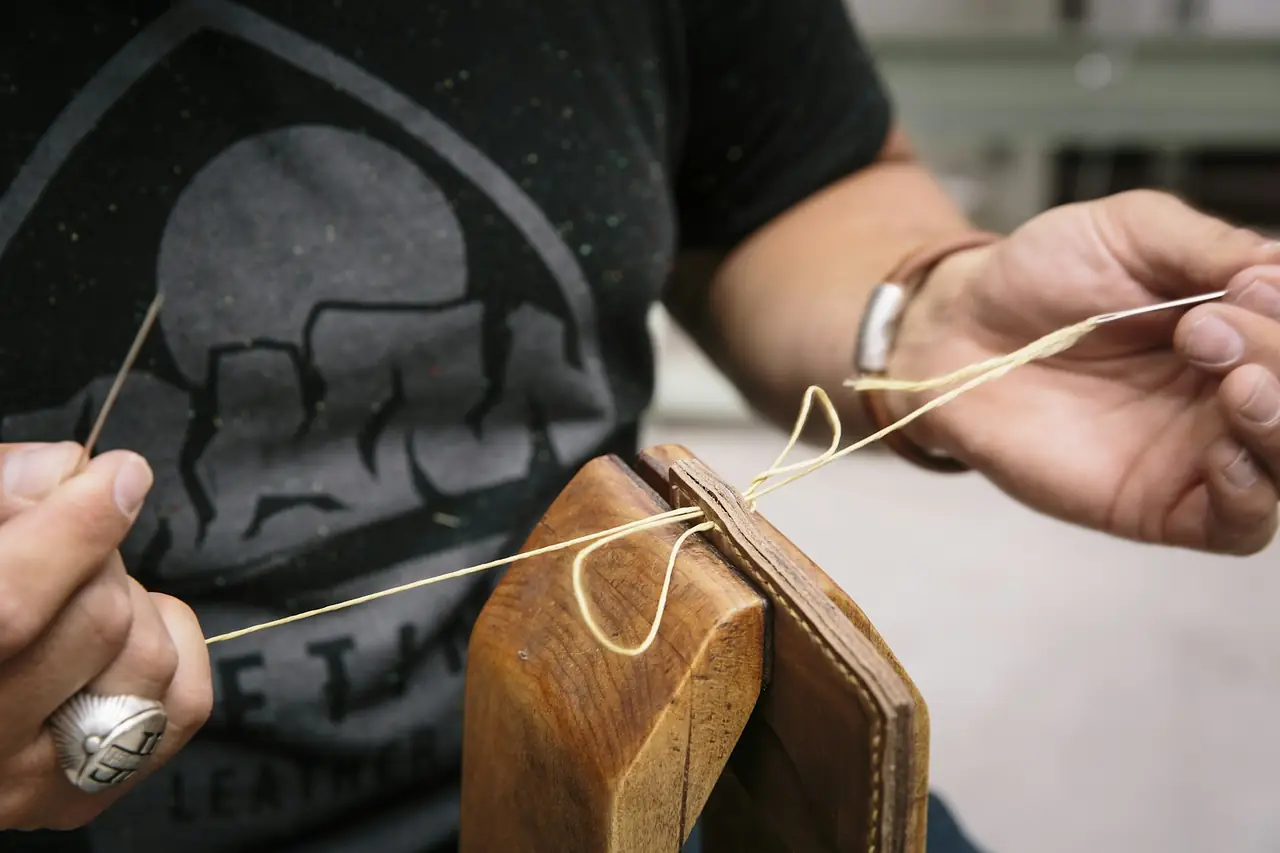
The saddle stitch is done entirely by hand. The maker punches evenly spaced holes, then passes one long thread through the leather with a needle on each end, crossing through every hole from both sides. Each stitch is locked in place by the thread passing through it twice. If one stitch is cut or worn, the stitches on either side hold, and the seam stays closed.
It is the same stitch saddlers have used for centuries on equipment that has to survive real strain, which is where the name comes from.
How to spot hand stitching
- The angle. Hand saddle stitches usually sit at a slight, consistent slant, and they look the same on both sides of the leather.
- The thread. Hand stitching often uses a thicker waxed thread, which gives each stitch a raised, defined look.
- The rhythm. Machine stitches are perfectly identical. Hand stitches are even and deliberate, with a quiet, human rhythm you can see up close.
- Backstitching. On a hand-stitched seam, the ends are finished by stitching back over a few holes, rather than with knots or melted thread.
Why it takes longer
Hand stitching is slow. A single seam on a bag can take hours, and a full piece many more. That time is part of what you're paying for: a seam that won't fail at the corners, the handle joins or the strap attachments, where bags take the most stress.
What it means for repairs
A hand-stitched seam is also easier to repair. Because the holes are already punched and the thread can be replaced section by section, a skilled maker can restitch a worn area without rebuilding the bag. That's one reason leather restoration works so well on well-made pieces.
The bottom line
If you want a leather bag you'll still carry in ten years, look at the stitching first. On every KAT Designs piece, the seams are stitched by hand in our Lagos studio, one stitch at a time.