Materials
Full-Grain, Top-Grain or “Genuine” Leather: What Are You Really Buying?
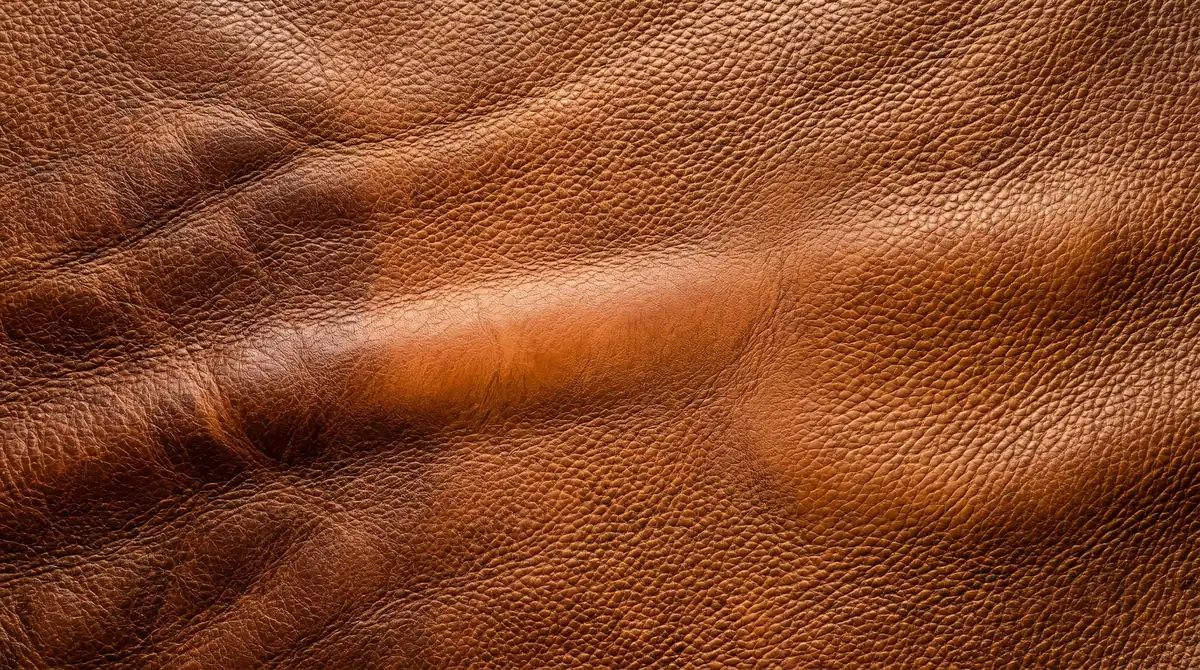
Walk into any market and you'll see labels like “genuine leather”, “top-grain” and “full-grain”. They sound similar, but they describe very different materials, and the difference decides how long your bag lasts and how it ages.
A hide has layers
A cowhide is thick, so tanneries split it into layers. The outermost layer, just under the hair, has the tightest, strongest fibres. That surface is called the grain. The deeper you go, the looser and weaker the fibres become. Every leather label is really telling you which layer you're getting and how much it has been altered.
Full-grain leather
Full-grain leather keeps the entire grain surface, with nothing sanded away. You can see natural marks: small scars, pores and variations in texture. Those marks are a sign of honesty, not a flaw. Because the strongest fibres are intact, full-grain leather is the most durable option and it develops a rich patina, darkening and softening with use.
Top-grain leather
Top-grain leather is also from the outer layer, but the surface has been lightly sanded and usually finished with a coating to give it an even look. It is thinner and more uniform, and often a little more resistant to stains at first. The trade-off is that it won't age with the same depth, and once the finish wears, the leather underneath shows it.
“Genuine leather” and bonded leather
“Genuine leather” sounds like a promise, but in the trade it often refers to the lower split layers, heavily processed and embossed with an artificial grain pattern. It is real leather, but it is the weakest kind. Below that is bonded leather: leftover fibres glued together with a polyurethane surface. Bonded leather is the material that peels and flakes after a year or two, and it cannot be restored.
How to judge leather quality in person
- Look at the surface. Natural variation in the grain is a good sign. A perfectly repeating pattern often means an embossed or printed surface.
- Check the edges. Cut edges on good leather show dense, compact fibres. A papery or layered edge suggests splits or bonded material.
- Feel it. Quality leather feels supple and warm and has a slight give. Plastic-like stiffness or coldness is a warning.
- Smell it. Real leather has a rich, natural smell. A chemical smell points to heavy coatings or synthetics.
- Look inside. Turn the bag over and check the linings, seams and the back of the straps. Corners cut on the inside are usually cut everywhere.
Why it matters for a bag you'll keep
A bag made from better leather costs more at the start, but it keeps its shape, takes repairs well and can be restored years later. A cheaper bag made from bonded leather has a short life and ends up in a bin. When you buy a handmade leather bag, ask the maker which leather they're using and why. A good maker will be happy to explain.
At KAT Designs, the leather for every made-to-order piece is chosen with you during your consultation, based on how you'll use it and how you want it to age.