Craft
Edge Finishing: The Small Detail That Separates Fine Leather Goods
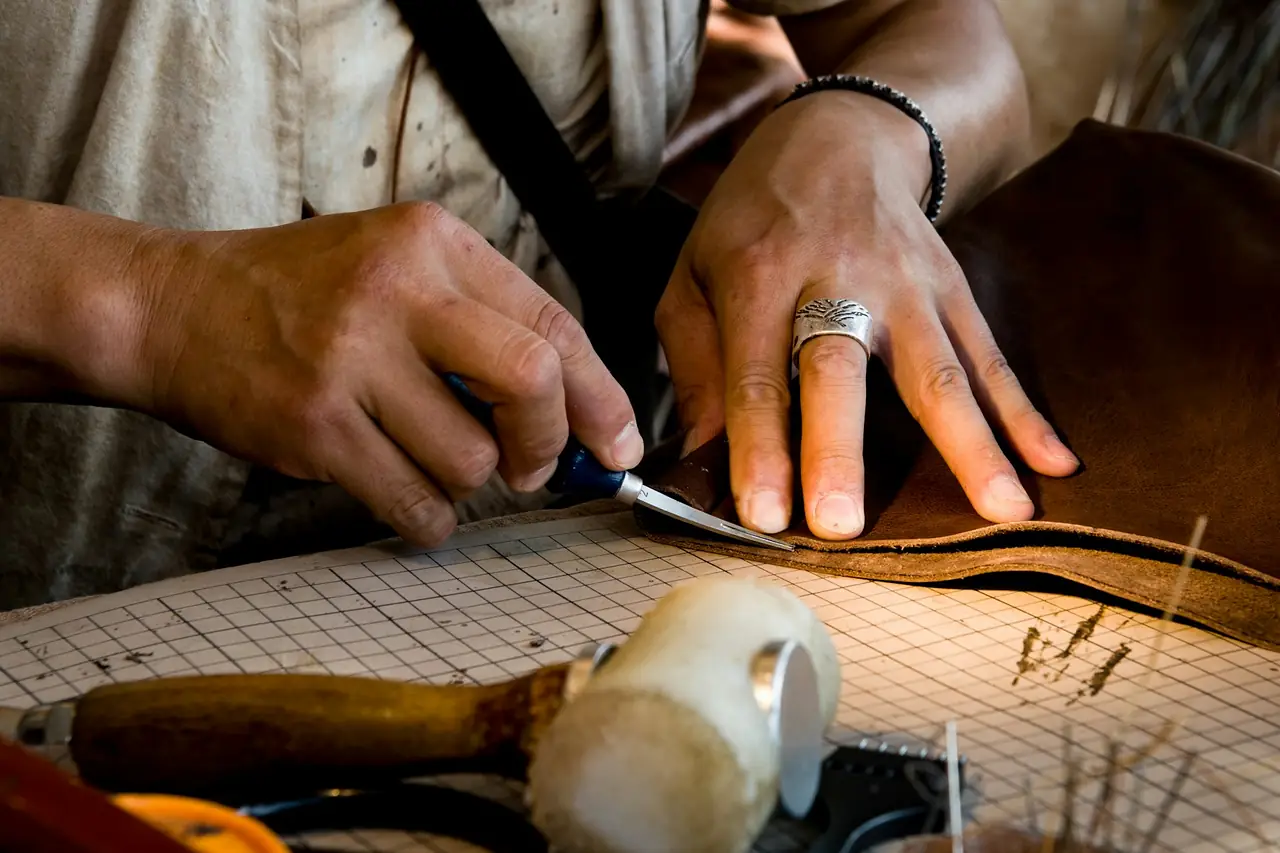
If you want to know how well a leather piece is made, don't look at the front. Look at the edges. Edge finishing is slow, invisible to most buyers, and one of the clearest signs of real craftsmanship.
Why edges need finishing
When leather is cut, the edge exposes its fibres. Left raw, those fibres fray, absorb moisture and dirt, and gradually break down. Finishing seals and smooths the edge so it looks clean and lasts. On wallets, straps and handles, which are touched all day, the edge finish is under constant wear.
The main methods
Burnishing
The edge is sanded smooth, then rubbed at speed with a tool, often with water or a burnishing agent, until friction compresses the fibres into a glossy, hard edge. Burnishing works best on firmer, vegetable-tanned leather, and it has a beautifully natural look.
Edge paint (edge coat)
A flexible edge paint is applied in thin layers. Between each layer the edge is sanded and smoothed, then painted again, sometimes several times, until it's perfectly even. Done well, painted edges are smooth, rounded and slightly glossy. Done badly, they're lumpy and crack within months.
Folded (turned) edges
The leather is thinned near the edge, then folded over on itself and glued, so no cut edge is visible at all. This gives a soft, rounded, refined finish, common on fine wallets and small leather goods.
Bound edges
A thin strip of leather is wrapped around the edge and stitched in place, like piping. It adds strength and a contrasting detail.
What good edges look like
- Smooth and even along the whole length, with no bumps or drips.
- Slightly rounded, not sharp or square.
- No visible layers or fibres poking out.
- Consistent colour, especially at corners and stitch lines.
- No cracking or peeling where the leather bends.
Caring for edges
Keep edges clean and dry, and avoid rubbing them against rough surfaces. Painted edges can wear at the corners over years of use; that's normal, and they can be stripped and repainted during restoration, bringing the whole piece back to life.
The details you feel
You may never consciously notice a well-finished edge, but you'll feel it every time you pick up the piece. It's one of many slow, hand-finished details in every KAT Designs piece.